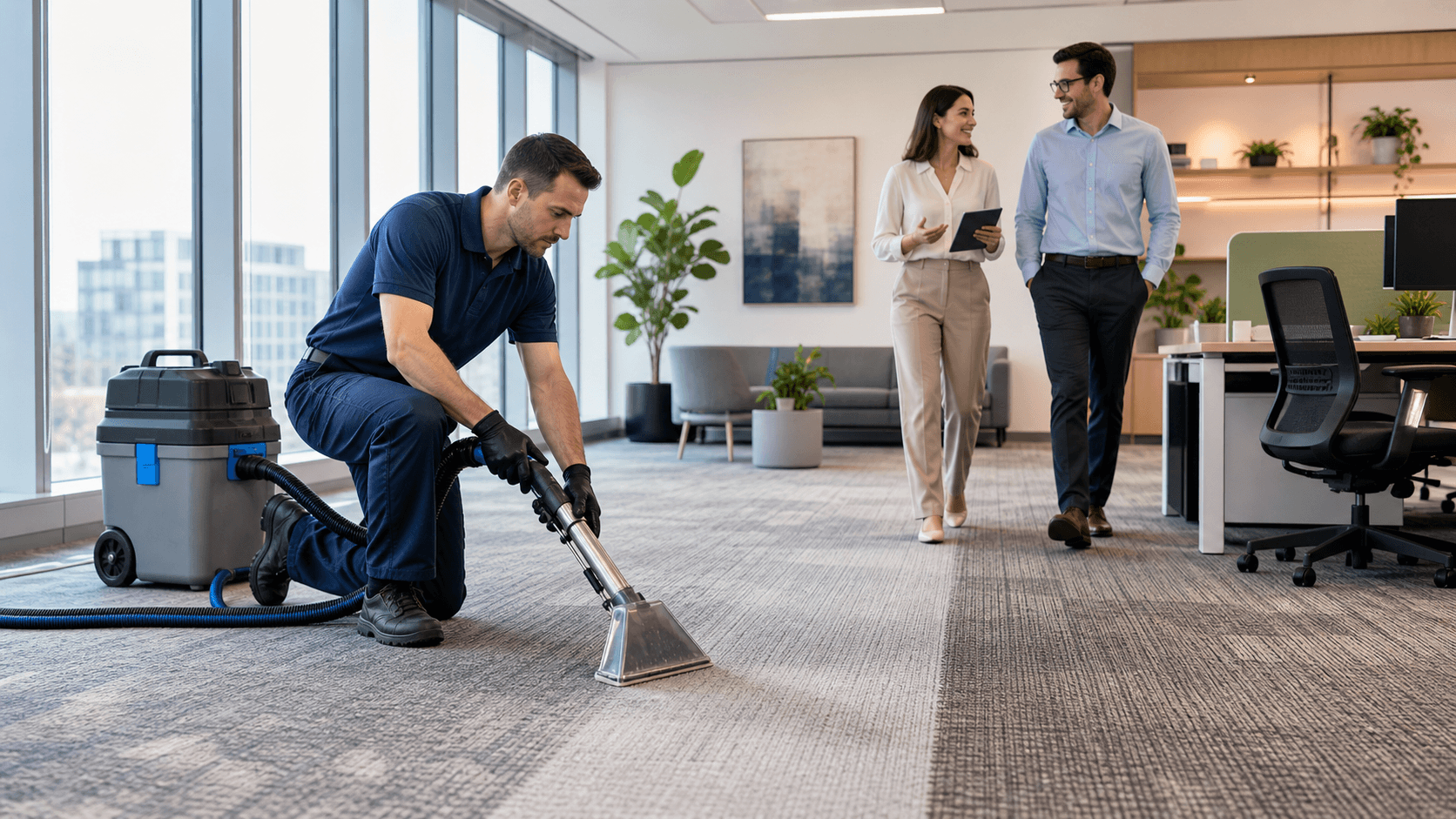
Keep Your Office Carpets Clean Without Slowing Work Down
Clean carpets make your office feel fresh, professional, and healthy. The challenge is that you cannot have loud machines, strong smells, or wet floors while you and your team are trying to focus or meet with clients. Your carpets still need care, but your workday cannot stop every time you book cleaning.
In this article, you will see how to keep your carpets in great shape without getting in the way of your schedule. You will look at after-hours cleaning, smart ways to reduce dry times, and simple spill steps your staff can follow. This matters even more if you are in places like Richmond Hill and Markham, where summer humidity, dust from outside, and heavier HVAC use can affect both indoor air quality and how quickly carpets dry.
Map Out Your Office's Real-world Cleaning Needs
Before you can build a low-disruption plan, you need to understand how your office actually runs. Every space is different, even if the floor plan looks similar on paper.
Start by walking your space and asking yourself:
- Where do people walk the most, like reception, hallways, and near printers?
- Which rooms see clients most often?
- Where do people really eat and drink, not just where they are "supposed" to?
- Where do chairs roll back and forth all day on the same patch of carpet?
Next, do a simple one-week audit. For one full workweek, make quick notes:
- Which areas look dull or gray by midweek?
- Where do you spot crumbs or coffee drips?
- Which spots near doors collect the most dust and outdoor debris?
These notes help you set a realistic schedule, such as:
- Daily vacuuming in reception, main corridors, and around workstations
- Weekly touch-ups in boardrooms, staff kitchens, and break areas
- Regular professional cleaning visits based on traffic and soil levels
For example, if you run a busy sales office with constant foot traffic and client visits, you may need more frequent professional service and stricter spot-care rules. If you manage a small professional practice with lighter use, you may stretch the time between deep cleanings, while still vacuuming high-traffic paths every day. Your goal is to match the work to how your office is actually used, not to a generic checklist.
Plan After-Hours Cleaning That Fits Your Calendar
Once you know what needs attention, you can plan when it happens. The key to low-disruption office carpet cleaning is timing.
Think about your schedule:
- Do most people leave by early evening?
- Do you have flexible hybrid days when fewer people are on-site?
- Are weekends quiet enough for bigger projects?
Many offices choose:
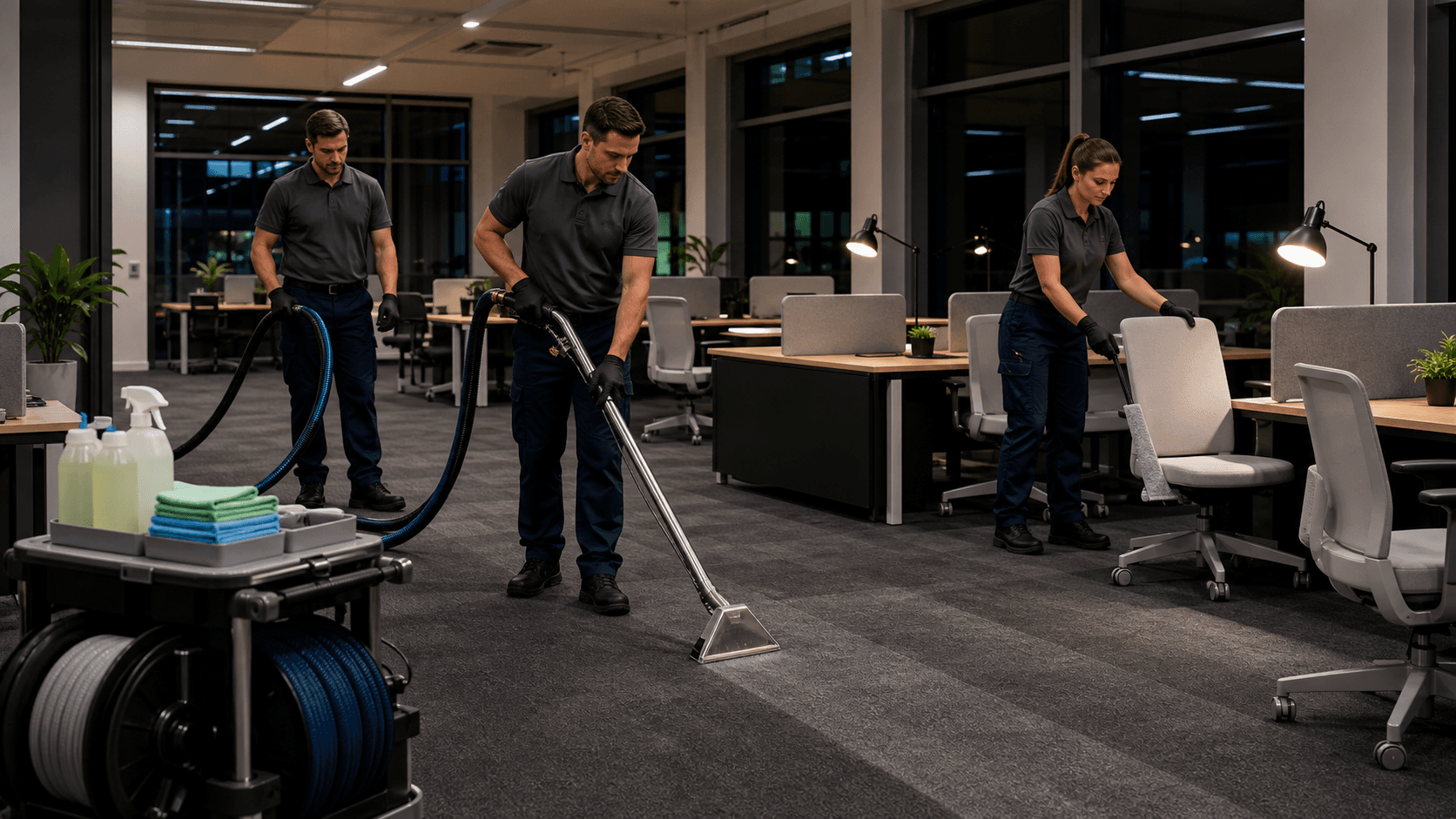
- Evenings on regular weekdays for moderate areas
- Early mornings for quick touch-ups before the day begins
- Weekends for large open spaces or entire floors
Work with your cleaning provider to group areas so they can handle larger sections efficiently but still leave key paths ready for use by the next business day. For instance, you might schedule one wing of the office for a Friday evening and the other the following week, so there is always a clear, dry route to desks and meeting rooms.
Clear communication keeps everything running smoothly. Before cleaning, you can:
- Send a short notice so staff know which areas are being cleaned and when
- Ask people to clear small items from the floor, like boxes or loose bags
- Use simple signs or cones so nobody walks over freshly cleaned areas
In warmer months, timing matters even more. Higher humidity and steady AC use can change dry times. Evening or overnight cleaning works well because the space is empty and you can let the HVAC run to support drying, without anyone needing to walk on the carpet.
Cut Dry Times With Smart Methods and Airflow
Not all carpet cleaning methods use the same amount of moisture. Lower-moisture approaches generally dry faster than very wet methods, which means less disruption to your team. When you choose office carpet cleaning services, ask about cleaning systems that are designed to dry quickly and use eco-friendly products that do not leave strong odors.
You can help speed things up by preparing the space:
- Remove small floor items so cleaners can move easily and work efficiently
- Make sure doors are unlocked for equipment access
- Clear the areas around vents and returns so air can flow freely
After cleaning, airflow is your best friend. Simple steps can make a big difference:
- Set the HVAC fan to "on" for a few hours to keep air moving
- Keep the AC at a steady, comfortable temperature to help pull moisture from the air
- Use portable fans pointed across the carpet, not straight down into it
- When the weather is dry and not too hot, open select windows to let fresh air move through
Good airflow helps carpets dry faster and also supports better indoor air quality. Fast-drying, low-odor products reduce the chance of sticky residues that can attract new dirt and help keep your office smelling clean, not chemical-heavy.
Build a Simple Spot-Care and Spill Response Playbook
Even with a great schedule, spills will happen. Coffee tips over in a meeting. Someone drops a bit of lunch on the floor. Ink marks appear out of nowhere. A basic spill protocol keeps small accidents from turning into permanent stains or bigger disruptions.
Keep your plan easy to follow:
- Who should be told about spills?
- What should staff do right away?
- What should they avoid so they do not damage the carpet?
Create a small "spill kit" for each floor that includes:
- Clean, white cloths or paper towels
- A gentle, carpet-safe spot remover approved by your provider
- Disposable gloves
- A short instruction card with simple steps
For common office spills, your card might say:
- Coffee or tea: Blot gently from the outside toward the center; do not scrub. Apply a small amount of spot remover if approved, then blot again.
- Food: Lift solid bits with a spoon or dull edge first, then blot any moisture.
- Ink or marker: Do not rub. Blot very lightly and call the person in charge of cleaning support.
The main rules are simple: act quickly, blot instead of scrubbing, and never grab random household cleaners that could bleach or set the stain. Consistent spot-care between professional visits helps your carpets last longer and means each service visit is faster and less disruptive.
Put Your Low-Disruption Plan Into Action
A smart, low-disruption carpet plan is built on a few clear steps: understand your traffic patterns, plan after-hours work, support drying with good airflow, and give your team simple, clear spot-care instructions they can follow without stress.
If your office is in the Richmond Hill or Markham area, it helps to work with a local team that understands your climate, your mix of weather and humidity, and the way modern offices operate. When you choose a provider, look for eco-friendly, fast-drying cleaning for carpets, rugs, upholstery, tile, and grout, with solutions that support the air your team breathes.
A good way to get started is to pick one upcoming week, do that quick audit of where your carpets struggle the most, and plan a trial after-hours cleaning for those areas. Then you can adjust your schedule based on what you see, how quickly things dry, and how your team responds. With a little planning up front, you keep your carpets looking clean and professional, support healthier indoor air, and stay ready for clients, all without slowing down the work that matters most.
Refresh Your Office Carpets For A Healthier Workspace
If you are ready to improve the look and air quality of your workplace, our professional office carpet cleaning services make it simple to get started. At Healthy Carpet Care, we tailor every job to your schedule and building needs so your team can stay focused on work. Reach out today through our contact page and we will provide a clear quote and convenient time for your cleaning.